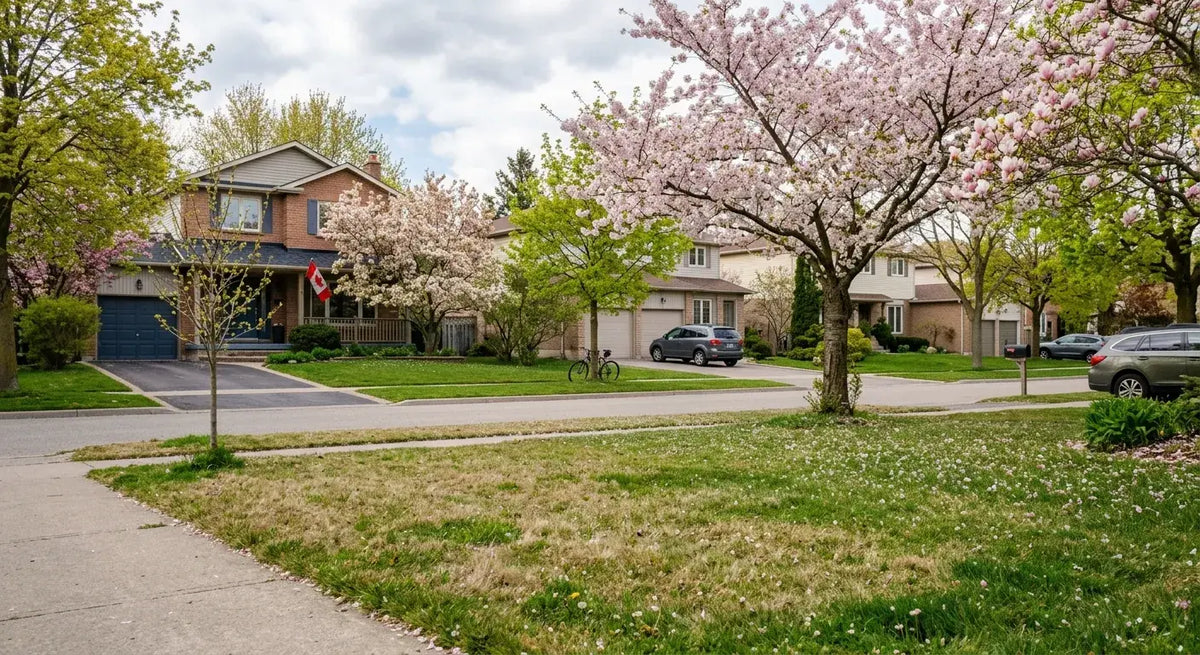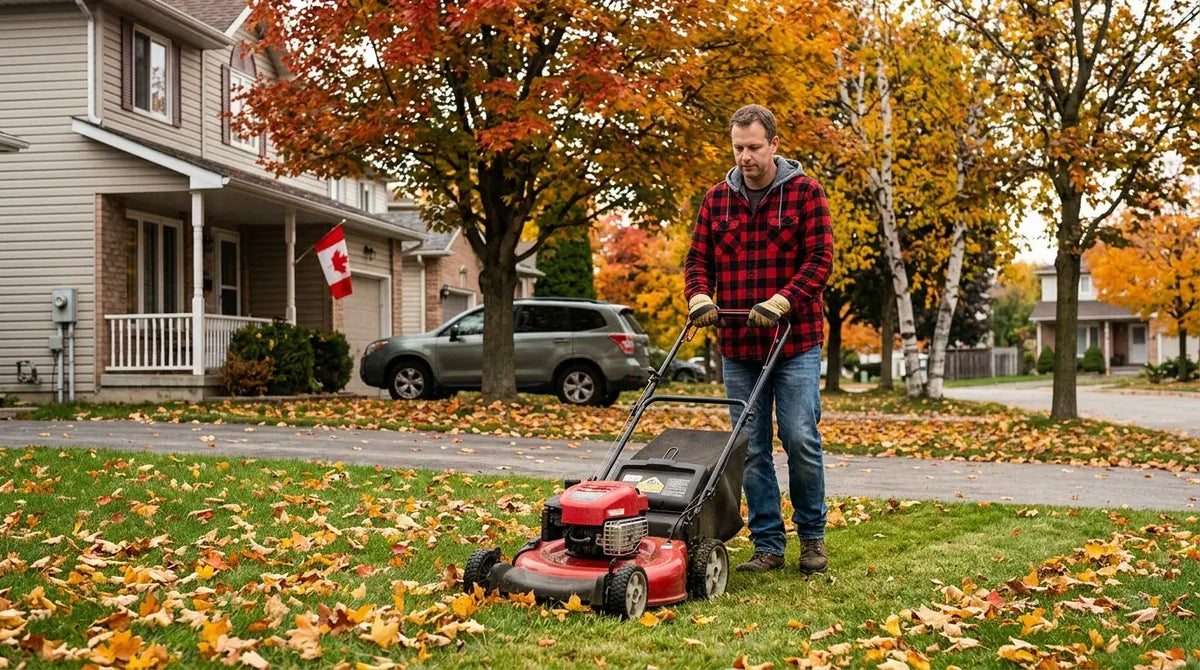




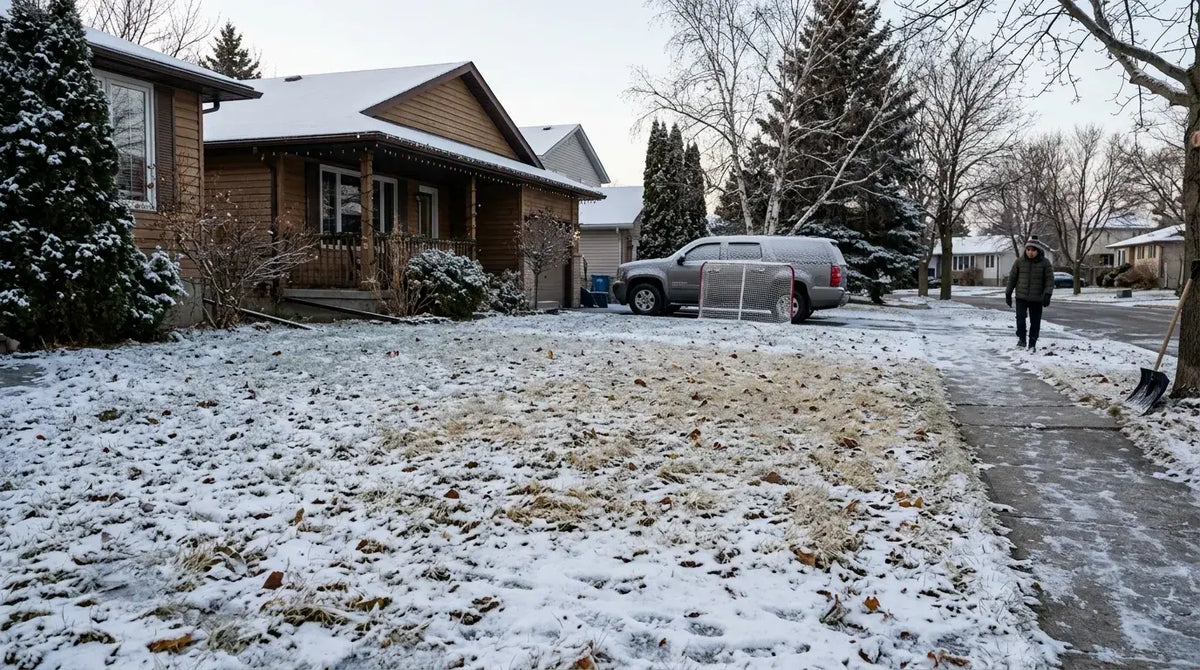
Winter lawn care in Canada is mainly about preparing before the ground freezes and protecting dormant grass afterward. Finish necessary mowing and leaf cleanup, water only when the lawn is dry enough to need it, and complete appropriate fall maintenance before soil conditions become unsuitable. Once the lawn is frozen or covered by snow, reduce foot traffic, keep de-icing salt away from turf, and avoid unnecessary mowing or fertilizer applications. After snow melts, diagnose the cause of damage before reseeding, because brown grass can result from dormancy, snow mold, salt injury, ice cover, or frozen-turf traffic.
What Happens to Your Lawn During Winter? Understanding Winter Lawn Care
Winter lawn maintenance in Canada is mainly about understanding how Turfgrass changes as temperatures fall and protecting it from conditions that can cause winter Lawn Damage. Cool-Season Grass may gradually stop growing and turn brown as it enters dormancy, so a brown lawn does not automatically mean the grass is dead. The key is to distinguish normal winter dormancy from damage caused by frozen-turf traffic, Snow Mold, De-Icing Salt, Ice Cover, or prolonged moisture.
What Happens to Turfgrass as Temperatures Drop?
As temperatures fall, Cool-Season Grass gradually slows its growth and can enter dormancy, with the Grass Crown and Turf Roots becoming the key tissues supporting winter survival and later spring recovery. Their activity is greatly reduced during dormancy, but the condition of these tissues still influences how well Turfgrass resumes growth when favourable conditions return.
Once Turfgrass is dormant or the Soil is frozen, routine mowing becomes less important. Avoiding unnecessary physical disturbance becomes a higher priority because frozen turf can be more susceptible to traffic-related injury.
The Main Winter Risks for Turfgrass
As temperatures fall, Cool-Season Grass gradually slows its growth and can enter dormancy, with the Grass Crown and Turf Roots becoming the key tissues supporting winter survival and later spring recovery. Their activity is greatly reduced during dormancy, but the condition of these tissues still influences how well Turfgrass resumes growth when favourable conditions return.
Once Turfgrass is dormant or the Soil is frozen, routine mowing becomes less important. Avoiding unnecessary physical disturbance becomes a higher priority because frozen turf can be more susceptible to traffic-related injury.
| Winter condition | Typical pattern | What it may indicate |
|---|---|---|
| Normal Dormancy | Broad, relatively even brown turf | Grass may still be alive and capable of spring recovery |
| Snow Mold | Circular or matted patches after snow melts | Possible fungal disease |
| De-Icing Salt | Damage beside driveways or sidewalks | Possible salt injury |
| Ice Cover / Freeze-Thaw | Damage in low or poorly drained areas | Possible ice or water-related stress |
| Frozen-Turf Traffic | Tracks or concentrated damaged areas | Physical injury from repeated traffic |
Frozen-Turf Traffic can physically stress Turfgrass when the ground is frozen, while Snow Mold is associated with prolonged cold and wet conditions around snowmelt. De-Icing Salt can affect turf near paved surfaces through accumulation or salt-laden meltwater, while persistent Ice Cover and repeated Freeze-Thaw conditions can create additional stress where water cannot drain properly. Snow Piles can also keep specific areas wet for longer and may concentrate contaminated snow or runoff.
The most useful diagnostic rule is to look beyond grass colour. Check the pattern, location, drainage, and surrounding winter conditions before deciding whether the lawn is simply dormant or requires Spring Recovery work.
How to Prepare Your Lawn Before the Ground Freezes
Preparing your lawn before the ground freezes means completing the essential fall tasks while the Turfgrass and Soil can still respond: finish mowing, remove excessive leaves and debris, correct moisture problems, and winterize the Irrigation System. Timing should follow local weather and grass growth rather than a single Canadian calendar date, because the period before persistent freezing varies widely across Canada.
Final Lawn Mowing Before Winter
Continue mowing while the grass is still actively growing, then make the final cut before persistent snow or freezing conditions make mowing impractical; for Cool-Season Grass, around 2–2.5 inches (5–6.5 cm) is a useful late-fall benchmark, while University of Minnesota Extension advises avoiding a final cut below about 2 inches (5 cm).
Avoid removing more than one-third of the leaf height in a single mowing. The objective is not to scalp the lawn before winter, but to leave Turfgrass at a manageable height that reduces excessive matting without creating unnecessary stress.

Remove Leaves and Lawn Debris
Remove thick Leaf Litter and debris before prolonged Snow Cover because heavy layers can restrict light and air movement around Turfgrass, while leaving the lawn moderately short after the final mowing can make leaf management easier.
A few scattered leaves are different from a continuous layer that remains on the lawn for weeks. Focus on areas where leaves accumulate heavily, particularly under trees and along property edges.
Watering Before the Ground Freezes
Water the lawn before freeze-up only when the Soil is dry enough to need it, rather than following a fixed winter-watering schedule; Canada.ca uses about 2.5 cm (1 inch) as a general deep-watering benchmark, while extension guidance also supports rehydrating dry Turfgrass before the soil freezes.
The important condition is adequate soil moisture without creating saturated ground. Avoid watering simply because winter is approaching if the lawn has already received sufficient moisture from rainfall.
Fall Fertilization and Winterizer Fertilizer
Do not assume every lawn needs a Winterizer Fertilizer application before winter because fertilizer requirements depend on Turfgrass type, soil conditions, nutrient availability, site characteristics, and local weather rather than one universal Canadian rate.
Soil testing can help identify genuine nutrient requirements, and fertilizer should always be applied according to the selected product's label. Canada.ca also recommends soil analysis periodically when nutrient management is uncertain.
Understand what you should do in fall lawn maintenance; see our guide "Fall Lawn Care in Canada: A Practical Guide to Prepare Your Lawn for Winter".
Aeration and Overseeding Before Winter
Aeration and Overseeding are seasonal lawn-care tasks rather than emergency treatments to perform immediately before freezing, so complete them only when Turfgrass is still within a suitable growing window and Soil conditions allow the lawn to recover.
Canada.ca identifies fall as a suitable period for aerating compacted lawns and late summer to early fall as a preferred overseeding period for many lawns. If freezing conditions are already approaching, forcing these operations may provide less benefit than leaving the lawn undisturbed.
For more info about lawn aeration, see our guide “Lawn Aeration: When, Why and How to Aerate Your Lawn in Canada”.
Winterize the Irrigation System
If you have an automatic Irrigation System, winterize it before the ground freezes. In cold climates, irrigation lines should be emptied or blown out as appropriate for the system to reduce the risk of freeze-related pipe or equipment damage.
The goal is not to complete every possible lawn-care task before winter. Finish the essential work while the lawn can still recover, then stop disturbing the Turfgrass as freezing conditions become established.
How Should You Protect Turfgrass During Winter?
Protecting Turfgrass during winter is mainly about reducing physical disturbance, managing snow carefully, and preventing prolonged ice or moisture problems. Once Cool-Season Grass becomes dormant and the ground is frozen, the best winter lawn care strategy is usually to do less, not to keep actively maintaining the lawn.
Reduce Foot Traffic on Frozen Turfgrass
Avoid unnecessary walking, running, parking, or moving heavy equipment across frozen Turfgrass. Frozen leaf tissue and the underlying Soil are less able to absorb repeated physical pressure, so concentrate winter traffic on sidewalks, driveways, and established paths whenever possible. This is especially important when the same section of lawn is repeatedly used as a shortcut or parking area.
Manage Snow Without Damaging Turfgrass
Normal Snow Cover generally does not need to be removed from a healthy lawn, but how snow is handled can affect Turfgrass. Avoid repeatedly piling large amounts of snow onto the same area, particularly when the snow contains De-Icing Salt, sand, or other material from paved surfaces. When clearing driveways and sidewalks, place Snow Piles where meltwater will not remain concentrated on the lawn or flow repeatedly into the same Root Zone.
Prevent Persistent Ice and Moisture Problems
Protect Turfgrass from prolonged Ice Cover by avoiding practices that trap water or create concentrated runoff in low areas. Persistent ice is more concerning when drainage is poor or when repeated Freeze-Thaw cycles leave water trapped around the Root Zone. Do not aggressively break or scrape ice directly against the turf; instead, address the drainage or runoff conditions that allow ice to persist.
The goal of winter protection is simple: keep dormant Turfgrass undisturbed, manage snow thoughtfully, and prevent avoidable ice or moisture buildup. More detailed De-Icing Salt prevention belongs to the next section because salt exposure requires a different set of lawn-protection measures.
How Can You Prevent De-Icing Salt Damage to Your Lawn?
Preventing De-Icing Salt damage starts with keeping salt and salt-contaminated meltwater away from Turfgrass whenever possible. In Canada, the highest-risk areas are usually lawn edges beside driveways, sidewalks, roads, and other paved surfaces, where Road Salt can accumulate in the Soil or move into the Root Zone through runoff.
Why De-Icing Salt Damages Turfgrass
De-Icing Salt can damage Turfgrass when salt accumulates in the Root Zone or when salty meltwater repeatedly moves across the lawn. High salt concentrations can interfere with water uptake and create stressful soil conditions, making affected grass more vulnerable to injury as winter ends.

Where Salt Damage Usually Appears
Look first at areas immediately beside paved surfaces rather than expecting uniform damage across the entire lawn. Salt injury commonly appears along driveways, sidewalks, curbs, and other locations exposed to winter runoff. The affected turf may form irregular strips or patches that follow the direction of meltwater.
Keep Salt-Contaminated Snow Off the Lawn
When clearing snow, avoid pushing or piling snow from salted driveways and sidewalks directly onto Turfgrass. The issue is not simply the amount of snow; contaminated Snow Piles can release salt into the Soil as they melt. Where possible, direct snow to areas where meltwater can drain away from the lawn instead of concentrating around the same Root Zone.
What to Do After Salt Reaches the Lawn
Do not try to correct winter salt exposure by adding more fertilizer. Once the ground has thawed and the lawn can accept water normally, natural rainfall and appropriate irrigation can help move soluble salts downward through the Soil, provided drainage is adequate. Severe or persistent damage may require soil testing and, depending on site conditions, renovation or reseeding later in the growing season.
The practical rule is simple:
Keep de-icing products off the lawn, prevent contaminated snow from accumulating on Turfgrass, and manage spring meltwater rather than treating salt damage as a normal fertilizer problem.
What Should You Avoid Doing During Winter Lawn Care?
During winter, avoid actions that disturb frozen Turfgrass, add nutrients to frozen Soil, or concentrate snow and contaminated runoff on the lawn. Once Cool-Season Grass is dormant, winter lawn maintenance should focus on preventing avoidable damage rather than forcing the grass to grow.
Should You Fertilize Frozen or Snow-Covered Soil?
Do not apply fertilizer to frozen or snow-covered Soil. The Turfgrass cannot actively use the nutrients under these conditions, and fertilizer can be carried away with melting snow or runoff instead of reaching the Root Zone. University of Minnesota Extension specifically advises against applying commercial fertilizer to snow-covered frozen soils.
Should You Mow During Winter?
Avoid mowing dormant or frozen Turfgrass simply to maintain a schedule. A Lawn Mower should only be used when grass is still actively growing and the ground is firm enough to avoid rutting or physical damage. Once persistent snow or frozen conditions have established, there is generally no reason to continue routine mowing.
Should You Keep Walking on Snow-Covered Grass?
Avoid repeated foot traffic across the same snow-covered or frozen areas. Occasional necessary access is different from creating regular walking routes, but repeated pressure can physically damage frozen Turfgrass. Keep routine winter traffic on paved paths whenever possible.
Should You Move Snow Onto the Lawn?
Do not deliberately concentrate large Snow Piles on the same section of lawn, particularly when the snow contains De-Icing Salt or other material from paved surfaces. Concentrated snow can keep the Soil wet for longer, while contaminated meltwater may carry salt into the Root Zone.
The basic winter rule is do not force maintenance onto a dormant lawn. Skip fertilizer on frozen ground, stop routine mowing when growth has ended, minimize repeated traffic, and manage snow so that it does not create concentrated moisture or salt problems.
How Do You Diagnose Winter Lawn Damage After Snow Melts?
Diagnosing winter Lawn Damage starts with looking at the pattern, location, and condition of the Turfgrass after Snow Cover disappears. Brown grass alone does not prove winter kill; Dormancy, Snow Mold, De-Icing Salt, Ice Cover, and Frozen-Turf Traffic can produce different symptoms and require different responses.
Is Brown Grass After Winter Dead or Dormant?
Brown Turfgrass may simply be dormant, especially when the colour change is relatively uniform across the lawn. Give the grass time to resume growth once Soil and weather conditions become suitable before assuming it needs reseeding. Areas that remain inactive while surrounding Turfgrass recovers are more likely to need closer inspection.
How Can You Identify Different Types of Winter Lawn Damage?
Use the location and pattern of affected Turfgrass as the first diagnostic clues. Different winter problems tend to leave different patterns, which can help distinguish normal Dormancy from damage before you begin repairs.
| Condition | Typical Pattern or Location | What to Look For |
|---|---|---|
| Normal Dormancy | Broad, relatively uniform brown turf | Grass gradually resumes growth as spring conditions improve |
| Snow Mold | Circular or matted patches after snow melts | Pink or gray fungal growth may be visible; typical patches can range from 2–8 in (5–20 cm) for pink Snow Mold and about 1 in–3 ft (2.5–91 cm) for gray Snow Mold |
| De-Icing Salt Injury | Strips or irregular areas beside driveways, sidewalks, and curbs | Damage follows paved surfaces or winter meltwater pathways |
| Ice / Drainage Damage | Low-lying or poorly drained areas | Damage corresponds with persistent Ice Cover, standing water, or repeated Freeze-Thaw conditions |
| Frozen-Turf Traffic | Tracks, paths, or concentrated areas | Damage follows repeated walking, vehicle use, or equipment traffic while the turf was frozen |
Snow Mold symptoms commonly become visible as snow melts, while salt and ice-related damage often has a stronger relationship with location and water movement. University of Minnesota Extension notes that salt injury is commonly associated with paved surfaces and winter runoff, while ice-related injury can occur where snowmelt cannot drain properly.
When Should You Wait and When Should You Repair?
Wait before repairing if the lawn is simply brown but has not yet had suitable conditions for spring growth. Consider repair when surrounding Turfgrass has clearly resumed growth but specific areas remain bare, severely damaged, or inactive, and the Soil is firm enough to work without causing additional damage.
The key diagnostic rule is pattern before treatment: identify where the damage occurs, compare it with the winter conditions that affected that area, and only then decide whether the lawn needs Spring Recovery work.
How Do You Help Your Lawn Recover After Winter?
Winter lawn recovery starts with giving Turfgrass time to resume growth before performing intensive maintenance. Begin cleanup only when the Soil is firm enough to work, then address salt-affected areas, bare patches, mowing, fertilization, and Overseeding according to the lawn’s actual condition rather than applying every treatment at once. Check what lawn care work should be done in the spring, see our guide "Spring Lawn Care in Canada".
How Should You Clean Up the Lawn After Snow Melts?
Wait until the lawn is no longer saturated before removing leaves and debris or lightly raking matted Turfgrass. Avoid aggressive raking while the Soil is soft because it can disturb emerging grass and damage the Root Zone. Snow Mold areas can benefit from gentle cleanup to improve air movement as the lawn dries.
When Should You Make the First Spring Mow?
Make the first spring cut when the Turfgrass is actively growing and the ground is firm enough to support a Lawn Mower without creating ruts. A practical benchmark is to wait until Cool-Season Grass reaches roughly 3.5–4 inches (9–10 cm), then mow according to the lawn’s normal cutting height rather than removing a large amount in one pass.
How Should You Handle Salt-Damaged Grass?
For salt-affected Turfgrass, first allow the Soil to thaw and ensure that drainage is adequate. Once the ground can absorb water normally, rainfall and appropriate irrigation can help move soluble salts below the Root Zone; avoid treating salt injury as a simple fertilizer deficiency. Severe damage may require soil testing and later reseeding or renovation.
When Should You Overseed or Repair Bare Areas?
Do not immediately reseed every brown patch after snow melts. Wait long enough to determine whether Turfgrass is recovering naturally, then repair areas that remain genuinely thin or bare. For Cool-Season Grass, Overseeding is generally better timed for the late-summer to early-fall growing window than rushed into unsuitable spring conditions.
When Should You Fertilize Again?
Fertilize according to Turfgrass growth, soil conditions, and nutrient requirements rather than using a fixed “spring fertilizer” date. Soil testing can help determine whether nutrients are actually needed, while applying fertilizer before the lawn is actively growing can provide limited benefit and increase the risk of nutrient loss.
Winter recovery is therefore a wait → assess → repair process.
Let the lawn dry and resume growth first, then address only the areas that show genuine damage.
Winter Lawn Care FAQ
Start winter lawn preparation before the ground becomes consistently frozen and while the Turfgrass can still respond to maintenance. Because Canadian climates vary considerably, use local temperatures, grass growth, and the onset of persistent snow or freezing conditions rather than relying on one nationwide date.
For Cool-Season Grass, avoid cutting the lawn excessively short before winter. A final mowing height around 2–2.5 inches (5–6.5 cm) is a practical benchmark, with University of Minnesota Extension recommending not going below 2 inches (5 cm).
Not automatically. Fall or Winterizer Fertilizer should be based on the Turfgrass type, Soil condition, nutrient requirements, and local growing conditions. Never apply commercial fertilizer to frozen or snow-covered Soil.
Water before the ground freezes if the lawn is dry and needs moisture, but do not follow a fixed winter-watering schedule. Canada.ca uses about 2.5 cm (1 inch) as a general lawn-watering benchmark, while extension guidance recommends rehydrating dry turf before freeze-up.
It is better to minimize repeated foot traffic on frozen Turfgrass. Occasional necessary access is different from repeatedly walking the same route, parking on the lawn, or using heavy equipment on frozen ground.
Normal Snow Cover is not automatically damaging and can provide insulation, but prolonged Ice Cover, poor drainage, contaminated Snow Piles, and repeated Freeze-Thaw conditions can create problems. The condition of the lawn beneath and around the snow matters more than snow alone.
Brown grass after winter may simply be dormant Turfgrass beginning its spring recovery, but localized patterns can indicate Snow Mold, De-Icing Salt injury, Ice Cover damage, or Frozen-Turf Traffic. Check the pattern and location before deciding that the grass needs repair.
First allow the Soil to thaw and confirm that the affected area can drain properly. Once conditions allow normal water infiltration, rainfall and appropriate irrigation can help move soluble salts downward; persistent or severe damage may require soil testing and later reseeding or renovation.
Conclusion
Effective winter lawn maintenance in Canada is less about maintaining a growing lawn through winter and more about preparing Turfgrass before the ground freezes, protecting dormant grass during winter, and assessing damage after Snow Cover disappears. Finish essential fall tasks at the appropriate time, minimize traffic on frozen turf, manage Snow Piles and meltwater carefully, and keep De-Icing Salt away from the Root Zone where possible.
When spring arrives, do not assume that every brown area is dead. Check the pattern and location for signs of Dormancy, Snow Mold, salt injury, Ice Cover, or Frozen-Turf Traffic before deciding whether repair is necessary.
The simplest winter lawn-care sequence is: Prepare → Protect → Diagnose → Recover
Following that sequence helps avoid unnecessary winter maintenance while giving Turfgrass the best opportunity to resume healthy growth when spring conditions return.
Make lawn care easier with a Mammotion robotic mower. Automate routine mowing and spend less time maintaining your lawn throughout the year. 🔗 Explore Mammotion Robot Lawn Mowers
Did you like this article? Add us as a preferred source to find us more easily on Google.