



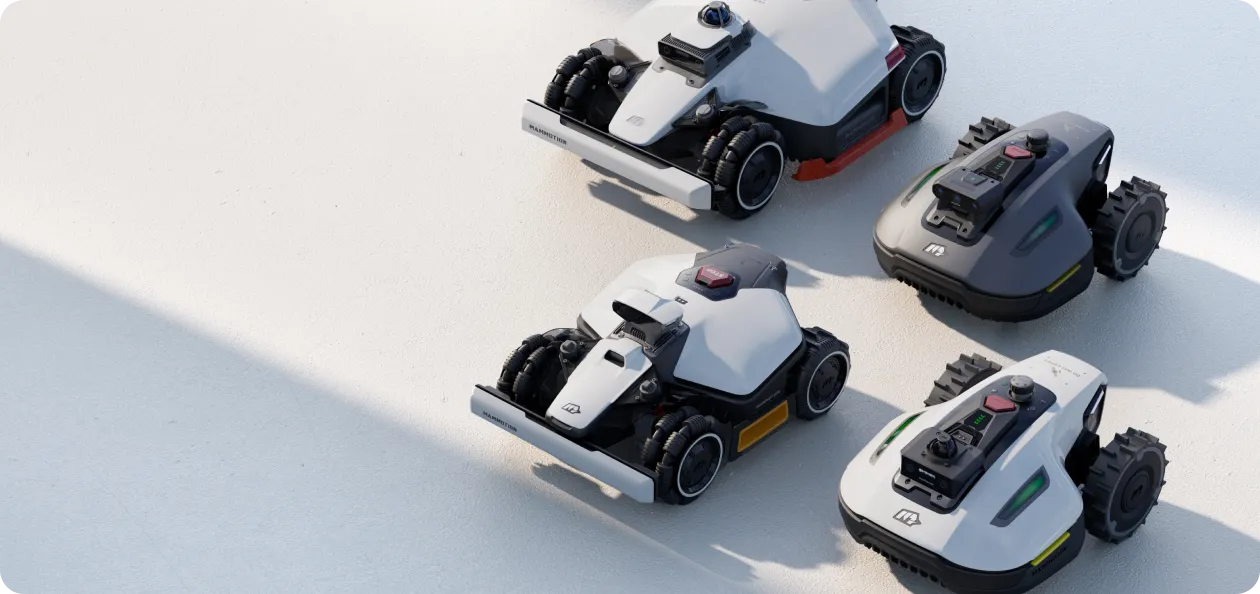


Robot lawn mowers are evolving far beyond traditional perimeter wires and simple, pre-programmed routes. At the forefront of this transformation is AI vision technology, which allows mowers to perceive their environment in real time and make intelligent decisions about where and how to mow. Unlike GPS-based or boundary-reliant systems that primarily answer “where am I?”, AI vision tells the mower what is around it, enabling safe and adaptive operation across varied yard conditions.
Using cameras paired with advanced computer vision algorithms, these mowers can identify lawn edges, detect obstacles, and respond to moving objects such as pets, children, or outdoor furniture. Essentially, AI vision turns a robotic mower from a machine that merely follows instructions into one that understands, interprets, and acts.
In practice, this capability is crucial for navigating real-world yards, where lighting conditions fluctuate, boundaries are irregular, and objects can move unexpectedly. The following sections explore the underlying concepts of AI vision in robotic mowers and why it forms the foundation of autonomous, wire-free lawn care.
What AI Vision Really Means for Robot Lawn Mowers
When manufacturers discuss “AI vision,” they are referring to more than just a camera on the mower. In modern robotic systems, AI vision is a complete perception platform that combines real-time image capture, on-device processing, and machine learning to understand the environment.
At the hardware level, mowers use monocular, stereo, or 3D cameras positioned to monitor the area in front of the machine. These cameras continuously feed visual data to onboard AI processors—often called edge AI—so decisions can be made instantly without relying on cloud connectivity.
The real intelligence comes from computer vision models trained to distinguish patterns and objects, including:
- Grass versus non-grass surfaces, such as paths or mulch
- Static obstacles like trees or posts
- Moving objects like pets or toys
Instead of reacting blindly, the mower can make contextual decisions: slowing down near obstacles, rerouting around unexpected items, or adjusting its path along the lawn edge. In simple terms: GPS tells the mower where it is, AI vision tells it what it’s facing—a distinction that enables fully autonomous, wire-free mowing in dynamic, real-world environments.

Key Functions Enabled by AI Vision in Robot Lawn Mowers
AI vision is more than a single feature—it forms the foundation for a mower’s ability to operate intelligently and autonomously. Modern robotic mowers rely on vision systems to continuously assess the environment, supporting safe, precise, and efficient mowing.
1. Recognizing Lawn Edges and Boundaries
One of the most critical roles of AI vision is understanding where mowing should occur. By analyzing color, texture, and surface patterns, vision systems can distinguish grass from other surfaces like pavement, mulch, or flowerbeds.
- This capability allows robotic mowers to:
- Follow natural lawn edges without the need for physical wires
- Navigate irregularly shaped lawns with greater accuracy
- Adapt to subtle changes in lawn layout over time
Unlike traditional wired systems, AI-powered edge detection responds dynamically to the environment, making it ideal for modern, landscaped yards.
2. Detecting and Classifying Obstacles
Not all obstacles require the same response, and AI vision gives robotic mowers the ability to differentiate between types of objects.
- Trained object-recognition models allow the mower to identify:
- Living obstacles, such as pets or wildlife
- Temporary items like toys, hoses, or garden tools
- Permanent features including trees, posts, or patio furniture
By recognizing what an object is, rather than just that it exists, the mower can respond appropriately—slowing down, rerouting, or stopping completely—enhancing both safety and efficiency.
3. Tracking Moving Objects in Real Time
Lawns are rarely static environments. Children playing, pets running, or objects shifting mean robotic mowers must respond to dynamic changes on the fly.
- AI vision enables real-time tracking, allowing the mower to:
- Predict short-term motion paths of moving objects
- Adjust speed and direction proactively
- Maintain safe operation even in unpredictable conditions
This dynamic awareness is essential for autonomous operation in residential settings.
4. Surface and Terrain Assessment
Beyond detecting obstacles, AI vision helps the mower understand the terrain. By interpreting visual cues like shadows, patterns, and surface variations, some systems can infer slopes, uneven ground, or transitions between surfaces.
With this information, the mower can:
- Modify speed on inclines or uneven terrain
- Optimize traction for a smoother mowing experience
- Maintain consistent cutting performance across different surfaces
While physical sensors still play a role, AI vision enhances the mower’s overall awareness and adaptability.

How AI Vision Complements Other Navigation Technologies
AI vision is a powerful tool, but it rarely works alone. Modern robotic lawn mowers often combine vision with other navigation methods to achieve the best balance of accuracy, reliability, and adaptability. Understanding how vision interacts with technologies like RTK GPS and LiDAR clarifies why hybrid systems perform so well in real-world yards.
1. AI Vision vs RTK GPS
RTK (Real-Time Kinematic) GPS delivers centimeter-level location accuracy by correcting standard satellite signals with reference data.
- RTK GPS answers: “Where am I?”
- AI vision answers: “What is around me?”
While RTK excels at pinpointing the mower’s position in open spaces, it can struggle near dense tree cover, tall buildings, or uneven terrain. AI vision adds environmental awareness, detecting obstacles, edges, and dynamic objects that GPS alone cannot handle. Together, they provide both spatial precision and contextual intelligence.
2. AI Vision vs LiDAR
LiDAR uses laser pulses to measure distances and generate detailed 3D maps of the mower’s surroundings. It performs reliably regardless of lighting conditions and excels at geometric accuracy.
However, LiDAR alone cannot inherently classify objects—it identifies shapes, not what those shapes are. AI vision adds semantic understanding, recognizing pets, toys, or garden furniture, and enables the mower to make intelligent decisions based on what it sees.
- LiDAR: precise mapping and shape detection
- AI vision: object identification and contextual reasoning
The two technologies work best in tandem, providing both physical and semantic awareness.
3. Pure Vision vs Sensor Fusion Systems
Some robotic mowers rely primarily on AI vision, while others use sensor fusion, combining vision, LiDAR, and RTK GPS. Leading-edge systems, like Mammotion’s Tri-Fusion, can dynamically switch between sensors depending on mowing conditions.
- Pure vision systems: simpler setup, lower hardware complexity
- Mammotion Tri-Fusion systems: higher reliability and adaptability across diverse environments
In most advanced mowers, AI vision acts as the decision-making layer, interpreting data from other sensors to guide intelligent mowing strategies. This layered approach allows the mower to handle complex, unpredictable lawns with minimal human intervention.
Real-World Challenges of AI Vision in Robotic Lawn Mowers
Although AI vision has significantly improved the autonomy of robotic lawn mowers, it is not without limitations. Vision-based systems interact directly with the real world, which means their performance can be influenced by environmental conditions, seasonal changes, and hardware constraints. Importantly, many of these challenges have seen major improvements in recent years, especially as manufacturers increasingly combine vision with other navigation technologies.
1. Sensitivity to Lighting and Weather Conditions
AI vision relies on visual input, making it naturally affected by environmental factors:
- Low-light conditions or nighttime operation can reduce recognition accuracy without supplemental lighting
- Strong shadows, glare, or uneven lighting may temporarily confuse edge or obstacle detection
- Rain, fog, or snow can obscure visual details and reduce system confidence
To address these challenges, modern robotic mowers often integrate vision with RTK GPS or LiDAR, allowing the system to maintain reliable navigation even when visual data becomes less dependable.
2. Seasonal Changes and Surface Variability
Lawns are not visually consistent year-round. Changes in grass colour, texture, or coverage can affect how vision systems interpret boundaries and surfaces.
- Drought or seasonal browning may reduce contrast between grass and non-grass areas
- Fallen leaves, mulch, or debris can be mistaken for obstacles
- Newly landscaped or uneven areas may require brief recalibration
Advances in machine learning and continuous software updates have greatly improved adaptability, but occasional user input may still be necessary in highly variable environments.
3. Dynamic and Unpredictable Objects
While AI vision excels at detecting and tracking movement, certain real-world scenarios remain challenging:
- Fast-moving children or pets crossing the mowing path
- Objects that suddenly appear, such as toys moved by wind
- Overlapping objects that partially obscure one another
In these situations, safety-focused systems are designed to slow down or stop rather than take risks. This cautious behaviour reflects progress in safety standards, even if it occasionally reduces mowing efficiency.
4. Hardware and Maintenance Considerations
The effectiveness of AI vision also depends on the quality and condition of physical components:
- Camera resolution affects the ability to detect small or low-contrast objects
- Onboard processing power determines how quickly decisions can be made
- Dirty, scratched, or obstructed lenses can degrade performance over time
Routine maintenance and higher-quality sensors play an important role in ensuring consistent long-term operation.
A Technology That Continues to Improve
While these limitations are real, it’s important to recognize how rapidly AI vision technology is evolving. Improvements in sensor quality, edge AI processing, and hybrid navigation systems have already reduced many early weaknesses. As software models continue to learn from real-world data, vision-based robotic mowers are becoming more reliable, adaptable, and practical for everyday residential use.
AI Vision in Hybrid Navigation Systems for Robotic Lawn Mowers
To move beyond the limitations of vision-only navigation, many modern robotic lawn mowers rely on hybrid navigation architectures. These systems combine AI vision with complementary technologies such as RTK GPS and LiDAR, allowing each component to offset the weaknesses of the others. This sensor fusion approach results in more stable, accurate, and reliable autonomous mowing across a wide range of yard conditions.
1. AI Vision + RTK-GPS
Pairing AI vision with RTK GPS brings together environmental awareness and high-precision positioning.
- RTK GPS continuously tracks the mower’s location with centimeter-level accuracy, making it especially effective in open areas where satellite signals are strong. AI vision adds context by interpreting what the mower encounters—recognizing lawn edges, detecting obstacles, and responding to unexpected changes.
Together, this combination enables efficient navigation across larger lawns with occasional obstacles, helping the mower maintain consistent coverage even in areas where GPS signals may momentarily drift.
2. AI Vision + LiDAR
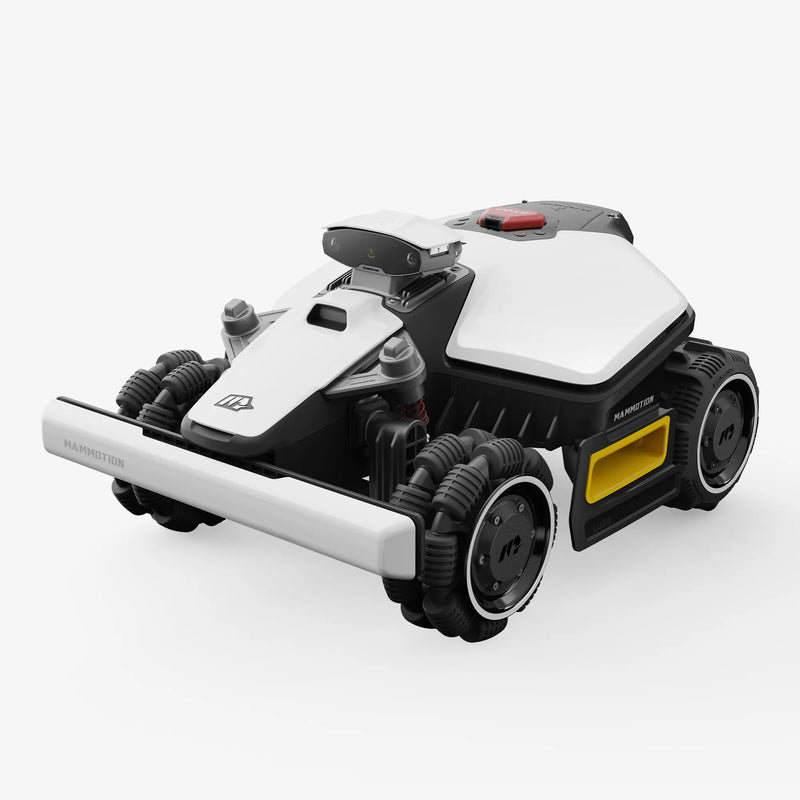
In more complex or shaded environments, LiDAR significantly enhances spatial perception when paired with AI vision.
- LiDAR generates a detailed three-dimensional representation of the surrounding space, accurately measuring distances and shapes regardless of lighting conditions. AI vision complements this by identifying what those shapes represent—such as pets, toys, trees, or outdoor furniture—and determining the appropriate response.
This combination is particularly effective in irregularly shaped yards, narrow passages, or areas with dense tree cover, where visual cues alone may be insufficient.

3. Mammotion Tri-Fusion Systems
Some of the most advanced robotic lawn mowers integrate AI vision, LiDAR, and RTK GPS into a unified navigation framework. Systems such as Mammotion’s Tri-Fusion dynamically prioritize different sensors based on real-time conditions.
- AI vision provides object recognition and contextual understanding
- LiDAR supplies accurate 3D spatial mapping
- RTK GPS maintains global positioning accuracy
By continuously selecting the most reliable data source, these systems deliver consistent performance across open spaces, cluttered zones, and changing environments. The result is a robotic mower capable of handling complex, multi-zone lawns with minimal user intervention and highly consistent cutting results.

Conclusion: Why AI Vision Is Central to Autonomous Robotic Lawn Mowing
AI vision has fundamentally changed how robotic lawn mowers interact with their environment. By giving these machines the ability to visually perceive, interpret, and respond to real-world conditions, vision technology enables a level of autonomy that simple boundary-based or position-only systems cannot achieve.
Rather than operating on fixed rules, vision-equipped robotic mowers can adapt to irregular lawn shapes, moving obstacles, and changing conditions. This adaptability is what allows wire-free mowing to function reliably in everyday residential settings, where no two yards—and no two mowing sessions—are ever exactly the same.
At the same time, real-world performance has shown that AI vision delivers the greatest value when used as part of a hybrid navigation system. When combined with technologies such as RTK GPS and LiDAR, vision acts as the decision-making layer that transforms raw sensor data into intelligent action. This layered approach improves accuracy, safety, and consistency across a wide range of lawn layouts and environmental conditions.
As sensor technology, edge AI processing, and software models continue to advance, the limitations of today’s systems will become increasingly minor. What remains clear is that AI vision is no longer an optional feature—it is a foundational component shaping the future of intelligent, wire-free robotic lawn care.


Leave a comment
This site is protected by hCaptcha and the hCaptcha Privacy Policy and Terms of Service apply.